Summary
# Summary: Soul Scholar: The Missing Lever in Education
**One-Sentence Summary**
Dr. Melanie Desmuke argues that true educational transformation requires shifting focus from individual capacity to "relational equity," where students and teachers thrive only when they feel truly seen, valued, and psychologically safe within their environment.
**Paragraph Summary**
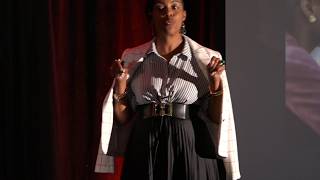
In this TEDxCapitol View ED talk, Dr. Melanie Desmuke introduces the concept of the "Soul Scholar" to redefine learning through the lens of human connection and environmental context. Using the metaphor of the honeybee, she illustrates how potential is not just an internal trait but is heavily dependent on the surrounding ecosystem. Desmuke critiques the current educational system for often rendering students "relationally invisible" and emphasizes that the brain cannot learn effectively when it is focused on self-protection rather than engagement. By breaking down the word "respect" into its Latin roots (*re* meaning again, *spect* meaning to see), she calls on educators, leaders, and policymakers to prioritize "relational equity"—the practice of truly seeing the whole human being. She concludes that closing academic and behavioral gaps requires more than curriculum changes or standards; it demands a cultural shift toward creating spaces where identity is acknowledged, safety is established, and everyone feels seen.
**Key Takeaways**
* **Environment Shapes Potential:** Just as a honeybee’s impact depends on its ecosystem, human potential (in students, teachers, and leaders) is context-dependent and flourishes only in supportive environments.
* **Relational Equity is the "Missing Lever":** The most critical factor in educational success is not just academic rigor, but the quality of relationships and the sense of belonging that allows individuals to feel safe enough to learn.
* **The Definition of Respect:** Desmuke redefines respect as "seeing again"—actively looking at and acknowledging the full complexity, identity, and humanity of every individual in the room.
* **Identity Cannot Be Left at the Door:** Schools often pressure individuals to be neutral or objective, but lived experiences and identities are always present. Ignoring them creates barriers to learning; acknowledging them fosters connection.
* **Safety Precedes Learning:** The human brain prioritizes safety. When students feel seen and valued, their nervous systems relax, allowing them to move from self-protection mode to active learning and risk-taking.
* **Call to Action for Leaders:** Before implementing new curricula or initiatives, educators must ask, "Who in my learning space is still invisible?" and work to ensure every student and teacher feels genuinely seen.
**Important People/Entities**
* **Dr. Melanie Desmuke:** Leadership strategist, motivational speaker, founder of Scholars for the Soul, and the speaker of the talk.
* **Soul Scholar:** A term coined by Desmuke to describe an educator or student who is a lifelong learner, critical thinker, and committed to connecting their soul/identity to the work of learning.
* **Honeybee:** Used as a central metaphor for underestimated potential and the importance of a supportive environment.
* **Aretha Franklin:** Referenced for the song "Respect" to engage the audience and introduce the etymology of the word.
**Notable Timestamps**
* **00:13 - 01:00**: The Honeybee Metaphor: Introducing the idea that small entities can have massive impacts when in the right environment.
* **01:33**: The Problem of Invisibility: "You cannot teach effectively who you do not see fully."
* **02:35**: Identifying the "Missing Lever": Relational equity as the key to unlocking learning.
* **03:17 - 03:35**: Etymology of Respect: Breaking down "respect" as "to see again."
* **04:37**: Identity is Always in the Room: Challenging the notion of neutrality in education.
* **05:26**: The Brain Needs to Feel Seen: Connecting psychological safety to cognitive function.
* **07:17**: The Core Question: "Who in my learning space is still invisible?"
* **08:08**: Conclusion: Building communities where people are challenged, known, and grown together.