Summary
**One-Sentence Summary**
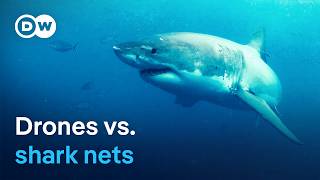
Australia is implementing a high-tech, non-lethal shark management strategy in New South Wales using drones and smart drumlines to balance public safety with marine conservation, a move that faces criticism from those advocating for traditional shark nets due to recent fatal attacks.
**Paragraph Summary**
Following a spike in fatal shark attacks in 2025, Australia has shifted toward advanced technological solutions to protect beachgoers while minimizing harm to marine life. In New South Wales, the Shark Management Program, led by marine biologist Paul Butcher, utilizes "SMART" (Shark-Management-Alert-In-Real-Time) drumlines that signal researchers when a shark is caught, allowing for the animal to be tagged and released alive rather than killed. This scientific approach is supported by the world’s largest drone-based surveillance system, operated by personnel like Gabriel Roxburgh, which monitors 70 beaches to provide real-time warnings and data on shark movements. However, this non-lethal strategy is controversial; surfer and activist Daniel Webber argues that the removal of traditional shark nets endangers human lives, citing recent fatalities. Meanwhile, in neighboring Queensland, traditional nets remain in use despite significant criticism from environmentalists like Brylee Robinson and Bella Graham, who highlight the ecological damage caused by the entanglement of non-target species such as turtles and dolphins. The documentary explores the complex tension between ensuring human safety, preserving ocean ecosystems, and the political pressure to adopt either lethal or non-lethal control measures.
**Key Takeaways**
* **Shift to Non-Lethal Tech:** New South Wales has replaced lethal shark nets with SMART drumlines and drone surveillance, aiming to catch, tag, and release target sharks (great whites, tigers, bulls) with a nearly 99% survival rate.
* **Drone Surveillance:** NSW operates the world’s largest airborne shark-tracking program, using drones to monitor 70 beaches, identify shark species, and issue "Code 16" warnings to evacuate swimmers when necessary.
* **Public Safety vs. Conservation:** The program costs approximately $28 million annually and focuses on education and science, but critics argue that the lack of physical barriers like nets leaves humans vulnerable.
* **Regional Disparities:** While NSW moves toward high-tech coexistence, Queensland continues to use traditional shark nets, which are criticized for causing significant bycatch of endangered marine life.
* **Future Innovations:** Researchers are testing e-DNA technology to detect shark presence in water samples without physical capture, aiming for a future where no sharks need to be caught for monitoring.
**Important People/Entities**
* **Paul Butcher:** Marine biologist heading the NSW Shark Management Program; advocates for science-based, non-lethal management.
* **Mark Atkins:** Oversees the drone program in NSW.
* **Gabriel Roxburgh:** Drone operator and shark spotter in Ballina, NSW.
* **Daniel Webber:** Surfer and shark-control activist who witnessed attacks and campaigns for the reinstatement of shark nets.
* **Brylee Robinson & Bella Graham:** Environmental activists and marine biologists opposing shark nets in Queensland due to ecological impact.
* **New South Wales (NSW) Government:** Implements the SMART drumline and drone program.
* **Queensland Government:** Continues the use of traditional shark nets.
**Notable Timestamps**
* **00:01:** Introduction to the record number of fatal shark attacks in Australia in 2025.
* **02:30:** Explanation of SMART drumlines and how they differ from traditional lethal drumlines.
* **05:08:** Introduction to drone operator Gabriel Roxburgh and the scale of the drone surveillance program.
* **06:22:** Explanation of "Code 16" (shark sighting) and beach closure protocols.
* **09:41:** Discussion of recent fatal attacks on Swiss tourists and the emotional impact on the community.
* **12:00:** Daniel Webber’s perspective on the need for shark nets following personal trauma.
* **14:14:** Examination of traditional shark nets in Queensland and their impact on marine life.
* **15:46:** Activists documenting the suffering of entangled marine animals in nets.
* **22:40:** Overview of the $28 million annual cost of the NSW management program.
* **28:30:** Discussion of future technologies like e-DNA for non-invasive shark detection.